
Associate Professor, Aerospace Engineering
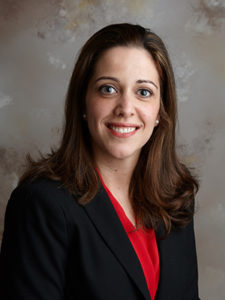
Dr. Ana Diaz Artiles is an Associate Professor in the Department of Aerospace Engineering at Texas A&M University. She leads the Bioastronautics and Human Performance Laboratory, where her research focuses on human health and performance in aerospace environments. Her goal is to create innovative solutions that protect human health in extreme environments, paving the way for sustained space exploration.
Her multidisciplinary approach bridges aerospace engineering, biomedical science, and human factors. Her specific areas of interest include human spaceflight, physiological and behavioral responses to altered-gravity environments, and human-systems interaction.
Dr. Diaz Artiles earned her Ph.D. from the Massachusetts Institute of Technology (MIT) in 2015, where she investigated artificial gravity combined with exercise as a countermeasure to physiological deconditioning in spaceflight. Prior to MIT, she spent five years in Kourou, French Guiana, as part of the Ariane 5 launch team.
She holds a background in aeronautical engineering from Universidad Politécnica de Madrid (Spain) and SUPAERO in Toulouse (France). Dr. Diaz Artiles is a 2011 Fulbright Fellow and a 2014 Amelia Earhart Fellow. In 2022, she received the Thora Halstead Early Career Award from the American Society for Gravitational and Space Research (ASGSR).
Adrien Robin, Ph.D
Research Assistant Professor, College of Nursing
 Dr. Adrien Robin is a postdoctoral fellow in the Department of Aerospace Engineering at Texas A&M University. His research focus on human space physiology, using simulated microgravity and altered gravity models. He received his M.S. in cardiovascular pathophysiology (2020) and his Ph.D. in integrative space physiology (2023) from the University of Angers (France), supported by a CNES doctoral grant. During his Ph.D., he was involved in several microgravity simulation studies (head-down bedrest and dry-immersion) with mechanical and physical exercise countermeasures.
Adrien received in 2023 a 2-year postdoctoral grant from the Translational Research Institute for Space Health (TRISH) to study the effect of acute hypovolemia and deconditioning after bedrest on cardiovascular and ocular gravitational dose-responses curves.