• Skip to primary navigation
  • Skip to main content
  • Skip to primary sidebar
  • Home
  • Research
  • Publications
  • News
  • People
  • Opportunities
  • Links
  • Contact Us

Bioastronautics and Human Performance

Texas A&M University College of Engineering

Research

Exercise

Augmenting Exercise Protocols With Interactive Virtual Reality Environments

Adherence to exercise has long been a bane of the modern human experience, despite its litany of extolled virtues. A variety of strategies have developed over the decades to encourage us to stick with our fitness goals, but as technology improves the fidelity of the virtual world to the real one, many once-implausible strategies are becoming plausible.
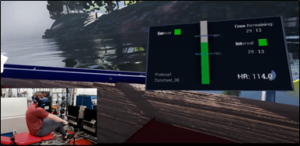
Team dynamics, an engaging environment, and a personalized program are just a few of the strategies which can be combined and employed using a virtual reality system.  Imagine: instead of looking at the inside of a ship’s hull for six months, you could don a helmet and join any number of other participants (real or virtual) across any distance or time while you work out.
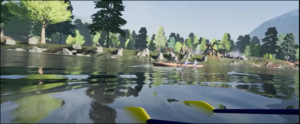
This study will examine the efficacy and viability of such a technology using already-established exercise protocols from the International Space Station and previous NASA studies. This research will be done in collaboration with former astronaut Dr. Gregory Chamitoff’s ASTRO Center and the Human Clinical Research Facility.
 

Biomechanics and Musculoskeletal Analysis

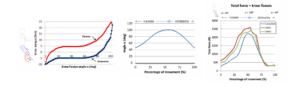
The musculoskeletal system might experience importent detriments in extreme environments. We use modeling approaches and computational tools to investigate human biomechanics and musculoskeletal performance in challenging environments, such as human-spacesuit interactions and musculoskeletal performance to novel exercise devices.

Human Spacesuit Interaction –  Extravehicular Activity (EVA) is a highly demanding activity during space missions. The current NASA spacesuit, the Extravehicular Mobility Unit (EMU), might be thought of as the ‘world’s smallest spacecraf’ and is quite an engineering achievement. However, the EMU has also led to discomfort and musculoskeletal injuries, mainly due to the lack of mobility in the pressurized suit that makes moving and operating within the suit challenging. We are developing a new musculoskeletal modeling framework in OpenSim to analyze human-spacesuit interaction and musculoskeletal performance during EVA.

Exercise using the HULK Device – Astronauts experience physiological deconditioning in space due to the extended exposure to microgravity including, but not limited to, muscle atrophy, loss of strength, and bone loss. Current countermeasures on the International Space Station include resistance training as well as aerobic exercises, and the use of the Advance Resistive Exercise Device (ARED) has been effective in reducing spaceflight musculoskeletal deconditioning. However, the ARED is a bulky device and compact devices that minimize mass and volume are necessary for use within the new space exploration vehicles. In collaboration with NASA Ames, we are investigating exercise performance on the Hybrid Ultimate Lifting Kit (HULK), a new lighter and more compact exercise device under development.

Exercise in Altered Gravity Enviroments

Artificial Gravity Combined with Exercise

In order to investigate physiological responses of centrifugation combined with exercise, we conducted a human experiment on 12 subjects using the MIT short-radius centrifuge. The centrifuge was constrained to a radius of 1.4 meters (the upper radial limit for a centrifuge to fit within an International Space Station (ISS) module without extensive structural alterations), and a cycle ergometer was added for exercise during centrifugation. We tested different levels of artificial gravity (0g, 1g, and 1.4g at the feet in the centripetal direction) and exercise intensity (25W warm-up, 50W moderate, and 100W vigorous) while collecting a variety of data including cardiovascular parameters, foot forces, and subjective comfort and motion sickness data.

Subjects successfully completed the exercise protocol and they tolerated the centrifugation well and motion sickness was minimal. Foot forces measurements indicate that there is a significant effect of both artificial gravity (AG) level and workload intensity on peak forces generated during ergometer exercise. The cardiovascular responses were more prominent (measured as larger deviations from their baseline values) at higher levels of artificial gravity and exercise intensity. In particular, cardiac output, stroke volume, and pulse pressure significantly increased with both AG level and workload intensity, suggesting that the combination of artificial gravity and exercise may be beneficial against cardiovascular deconditioning in space. Mathematical models were fit to these variables across the condition tested. These results suggest that centrifugation combined with exercise may be effective in improving musculoskeletal and cardiovascular functions during long-duration spaceflight. This work was partially supported by Fulbright Commission, the NSBRI (PI: Larry Young), and the MIT/Skoltech Seed grant.

Simulated Hypogravity Combined with Exercise

We are conducting studies using tilt platforms combined with cycle ergometer exercise to experimentally determine the impact of simulated hypogravity (including both microgravity and Lunar/Mars conditions) on various physiological parameters.  We measure a number of cardiovascular and pulmonary system parameters using a variety of non-invasive equipment, including intraocular pressure with contact tonometers, whilst subjects carry out varying intensity exercise protocols across a range of conditions.

Research by Subject

  • Altered Gravity Analog
  • Autonomy
  • Countermeasures
  • EVA
  • Exercise
  • Modeling
  • Performance
  • Physiology
  • Sensorimotor
  • VR
    • © 2018–2026 Bioastronautics and Human Performance Log in

      HRBB Rm 203

      College Station, Texas 77840

      Texas A&M Engineering Experiment Station Logo
      • Department of Aerospace Engineering
      • Twitter
      • State of Texas
      • Open Records
      • Risk, Fraud & Misconduct Hotline
      • Statewide Search
      • Site Links & Policies
      • Accommodations
      • Environmental Health, Safety & Security
      • Employment