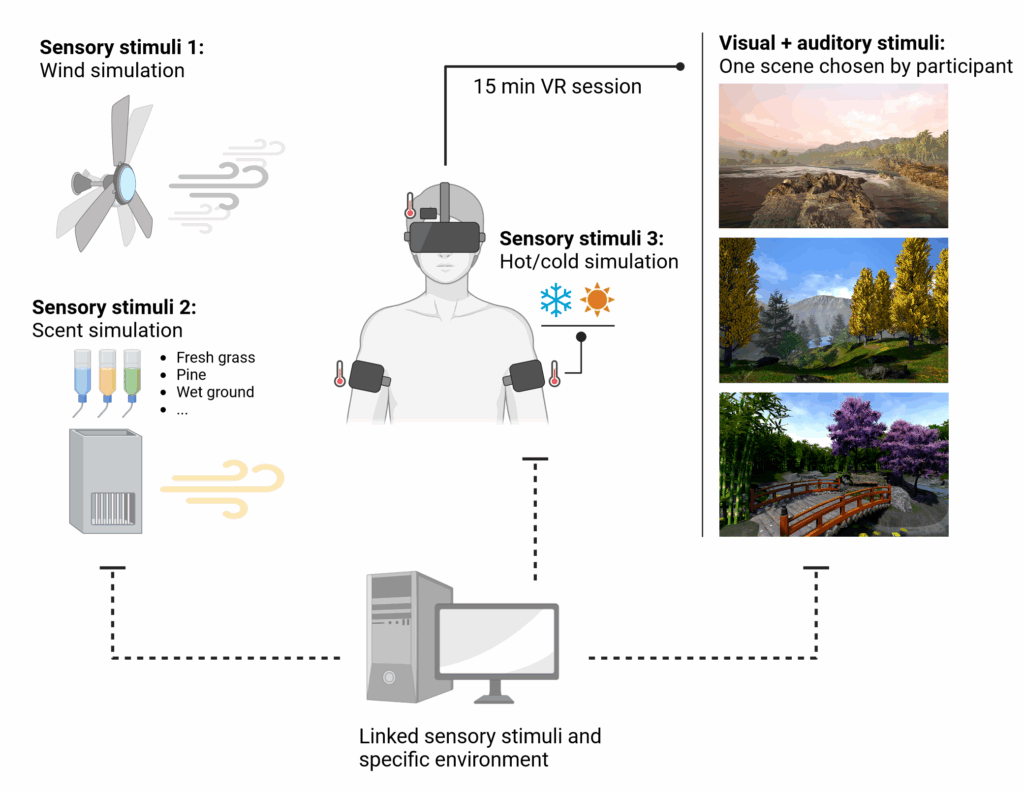
Adherence to exercise has long been a bane of the modern human experience, despite its litany of extolled virtues. A variety of strategies have developed over the decades to encourage us to stick with our fitness goals, but as technology improves the fidelity of the virtual world to the real one, many once-implausible strategies are becoming plausible.
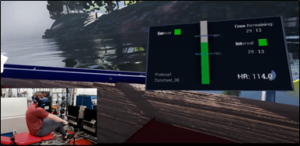
Team dynamics, an engaging environment, and a personalized program are just a few of the strategies which can be combined and employed using a virtual reality system. Imagine: instead of looking at the inside of a ship’s hull for six months, you could don a helmet and join any number of other participants (real or virtual) across any distance or time while you work out.

This study will examine the efficacy and viability of such a technology using already-established exercise protocols from the International Space Station and previous NASA studies. This research will be done in collaboration with former astronaut Dr. Gregory Chamitoff’s ASTRO Center and the Human Clinical Research Facility.
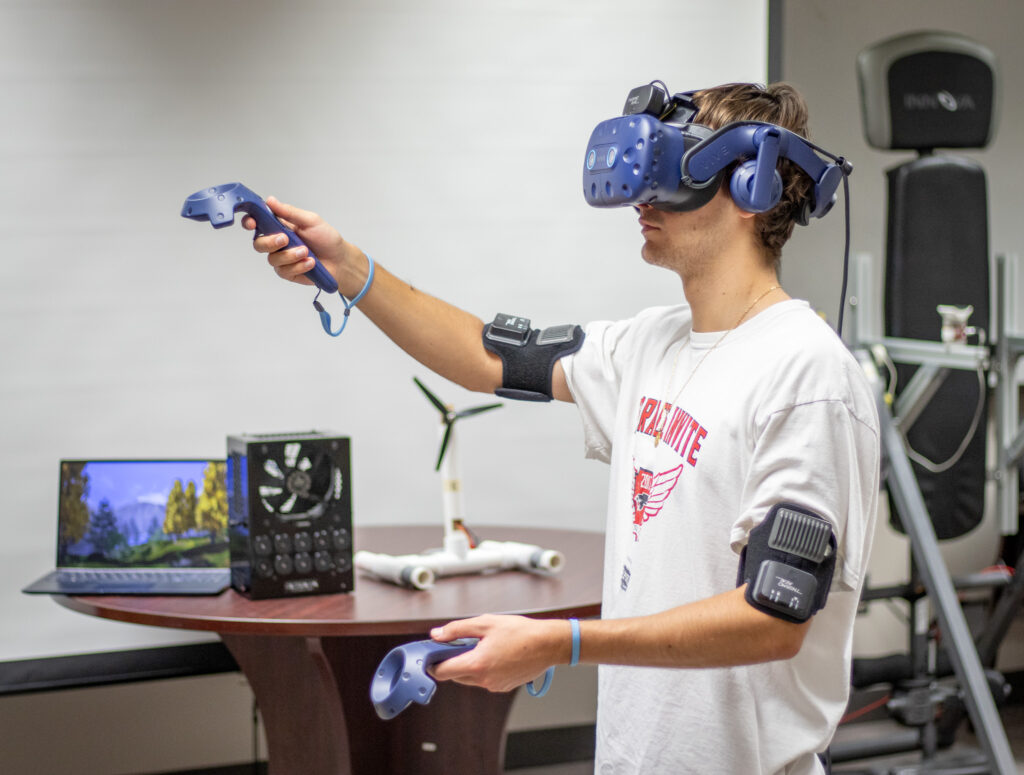 Future long duration exploration missions will require astronauts to spend prolonged periods in isolated and confined environments. Combined with sensory deprivation, loss of social connection, and a demanding workload, these factors can adversely affect an astronaut’s mood and stress levels. This places astronauts at an increased risk of developing adverse behavioral health conditions, which can cause performance decrements and jeopardize mission success. Current countermeasures used on the ISS will become increasingly difficult to use as missions venture further from Earth and begin to encounter significant communication delays. Virtual reality (VR) technology is a promising countermeasure, and continual advancements in VR technology have made it more robust and portable.